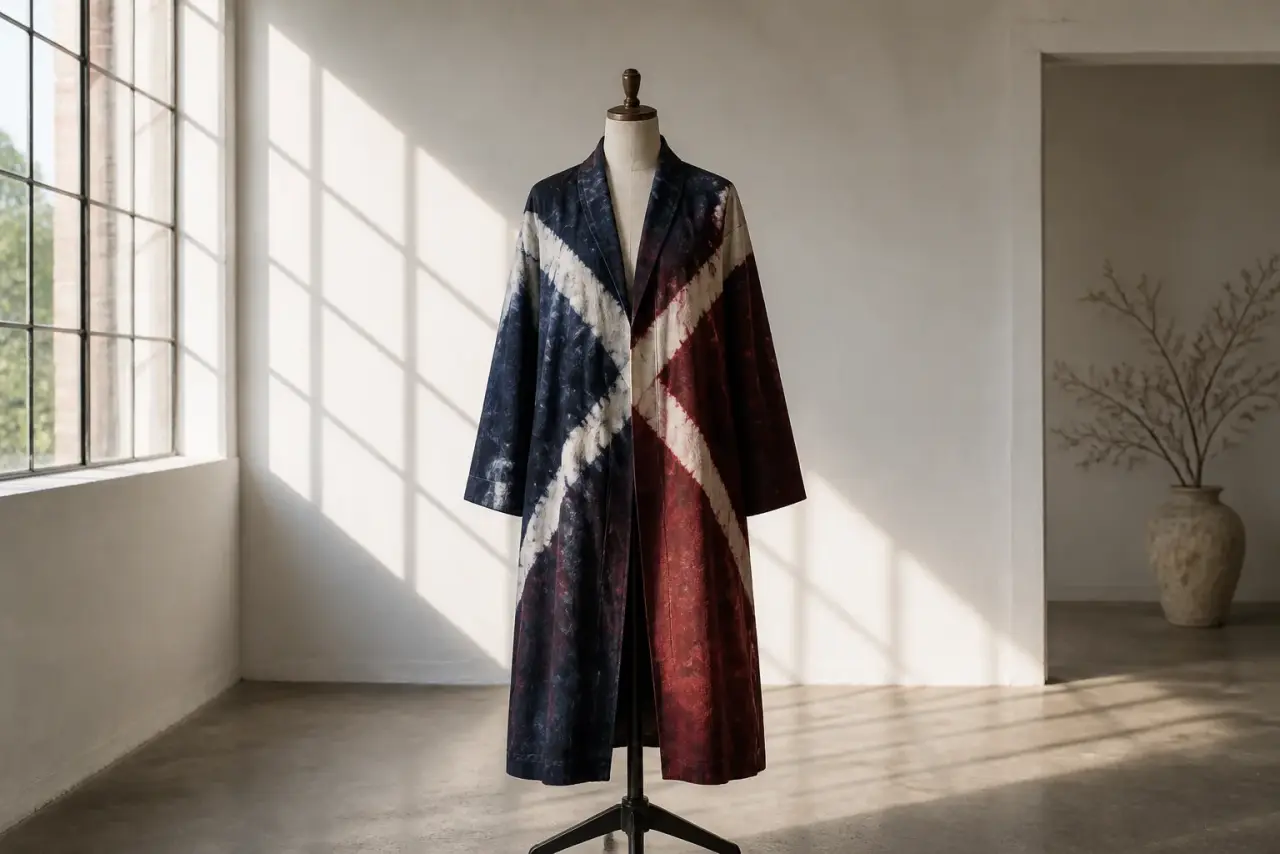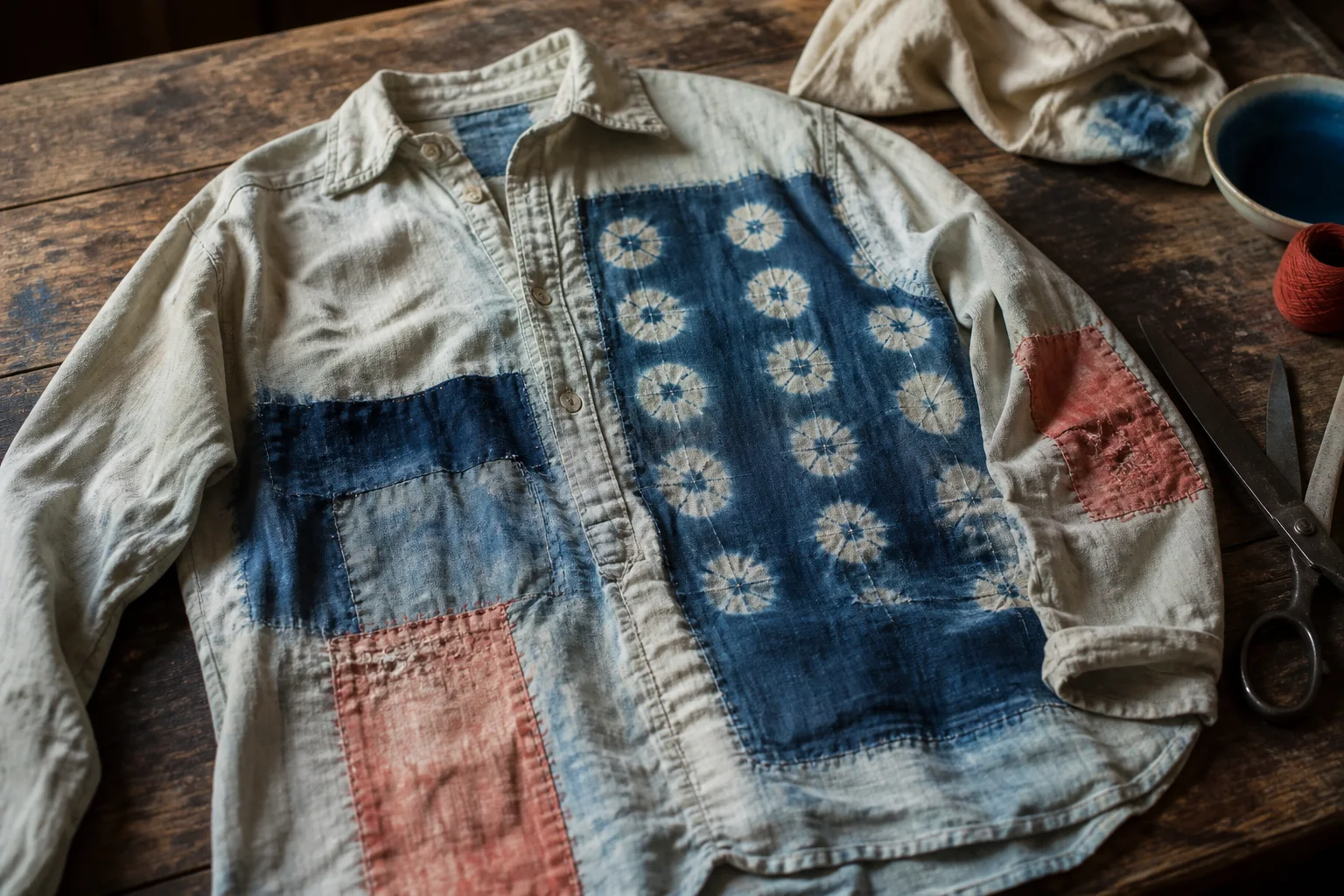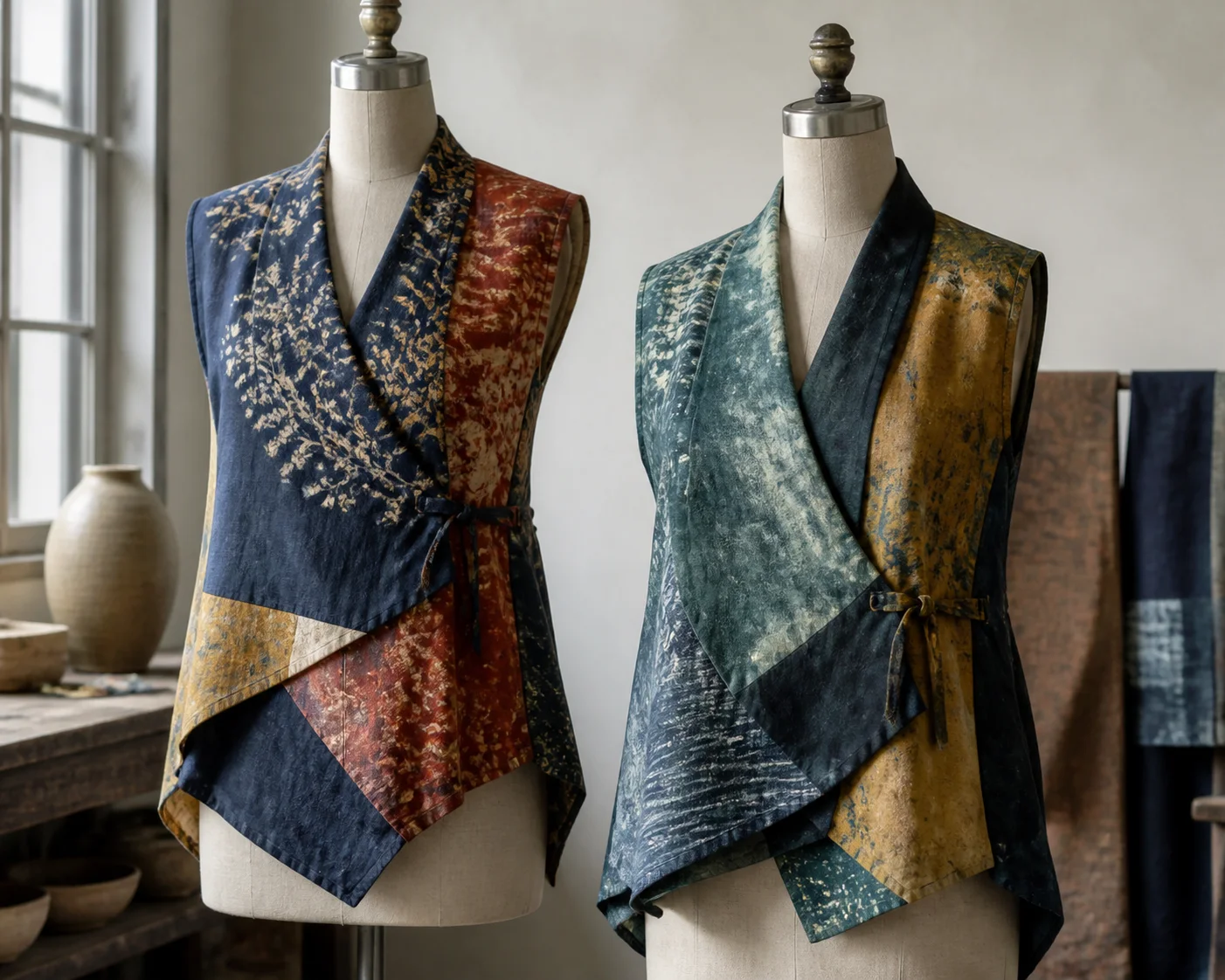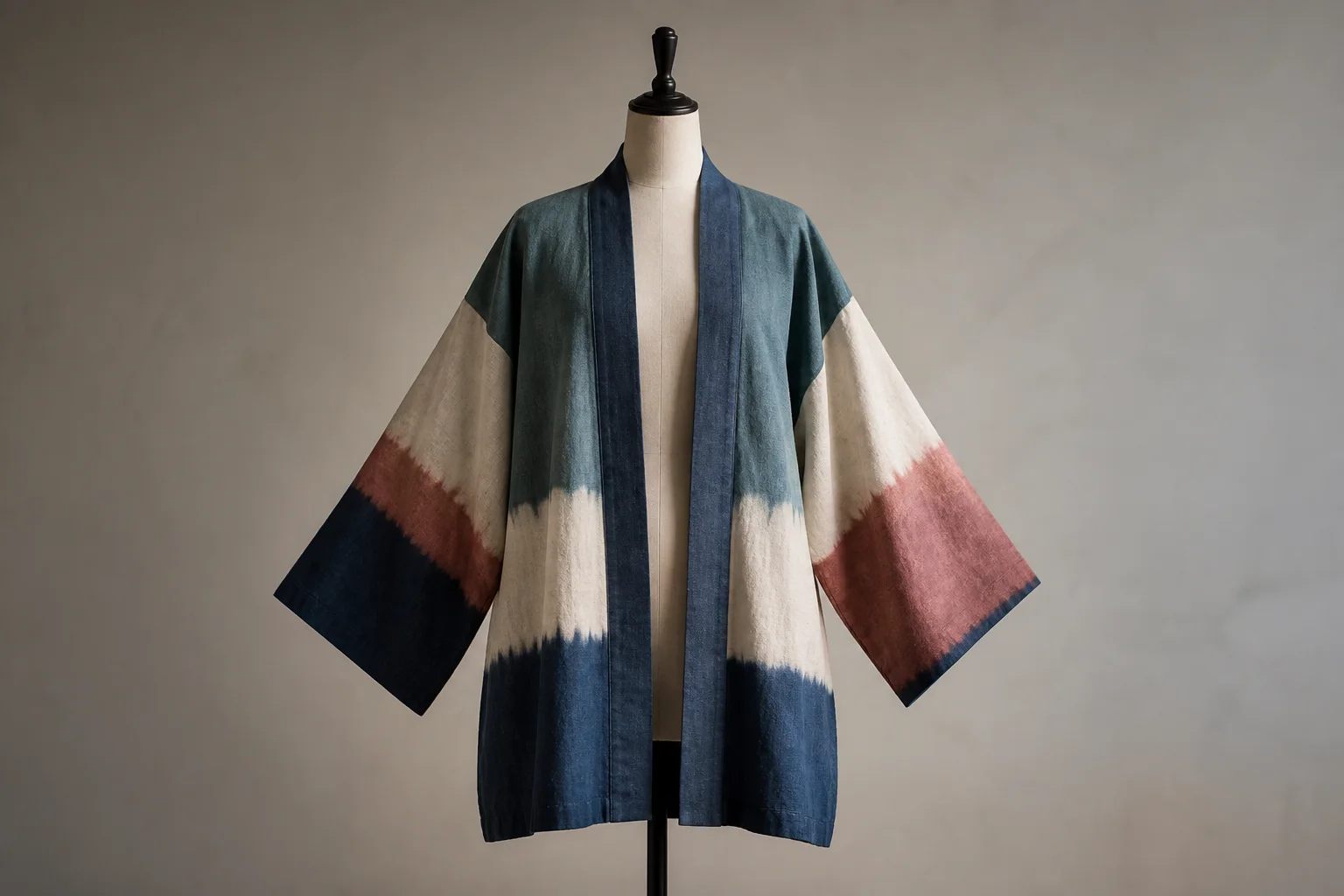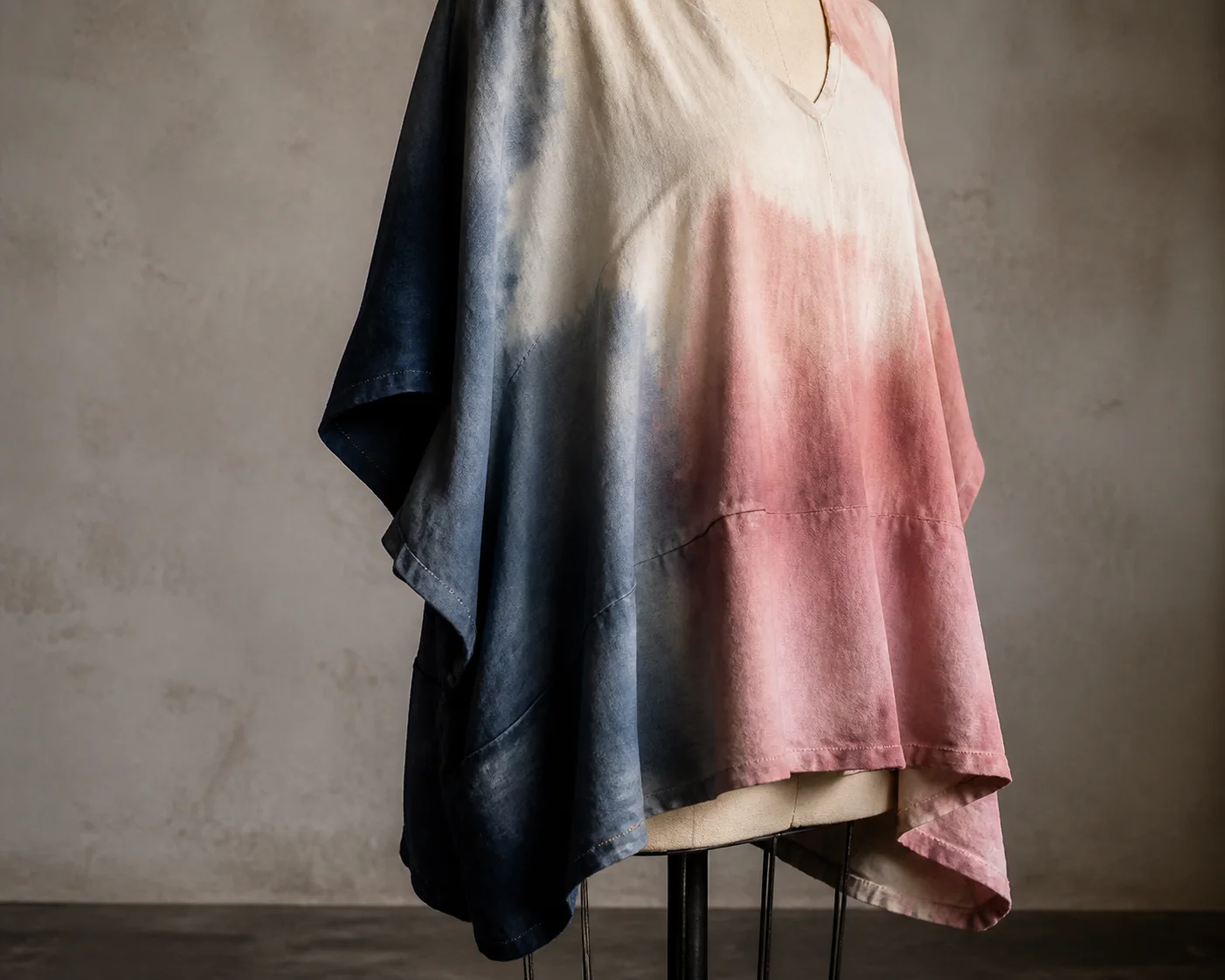
The most useful question is not whether a garment is striking on a hanger. It is whether the cloth, cut and intended movement agree.
Read the construction
Look at the shoulder, side seam, hem and closure before judging the pattern. A repeated motif can be interrupted deliberately by a seam, while a large unbroken field can become heavy in motion.
- Check ease at the armhole
- Follow the motif across seams
- Notice whether the fibre supports the cut
Separate taste from condition
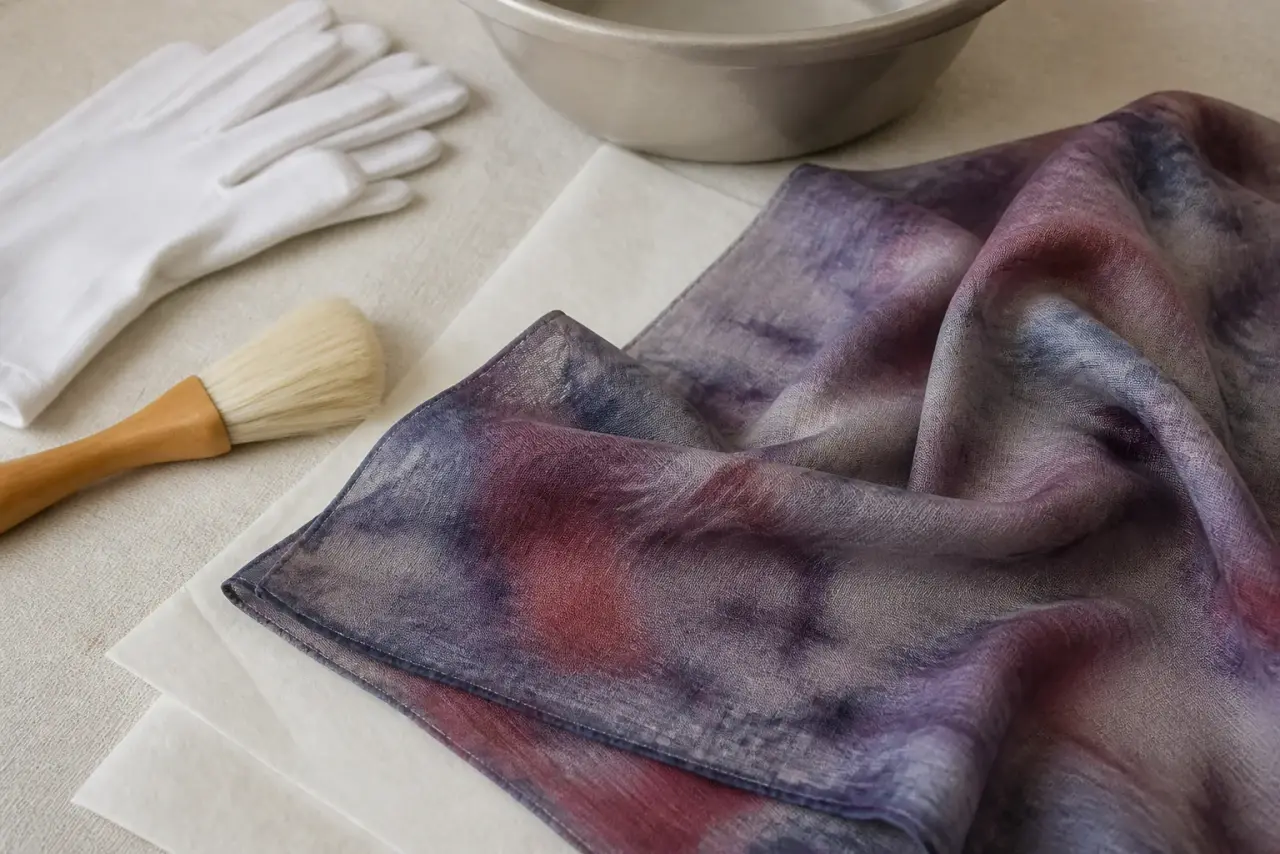
A one-of-a-kind garment may have a different care history from a new retail item. Ask what is known about fibre, dye, colourfastness and previous handling before wet cleaning.
- Find the care label
- Photograph details before a change
- Seek specialist help for significant pieces