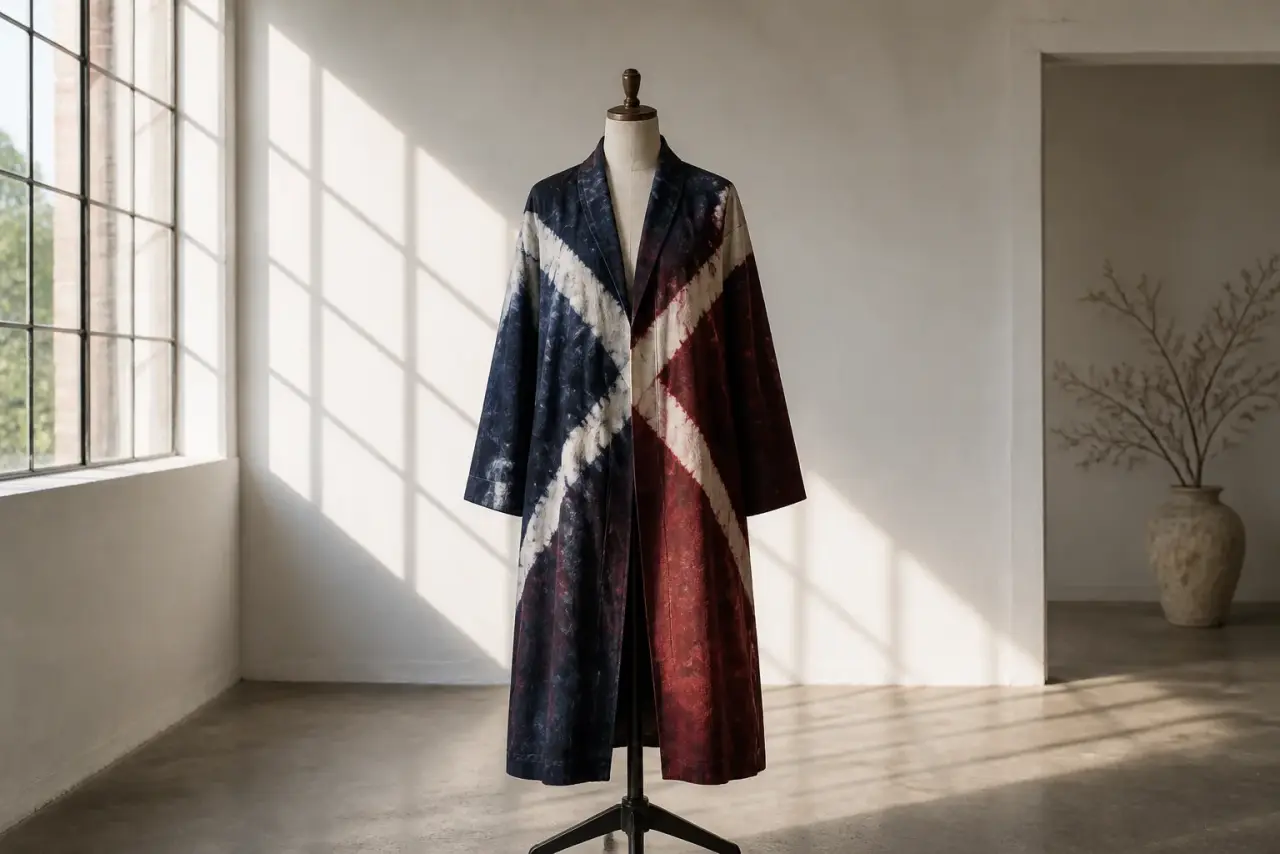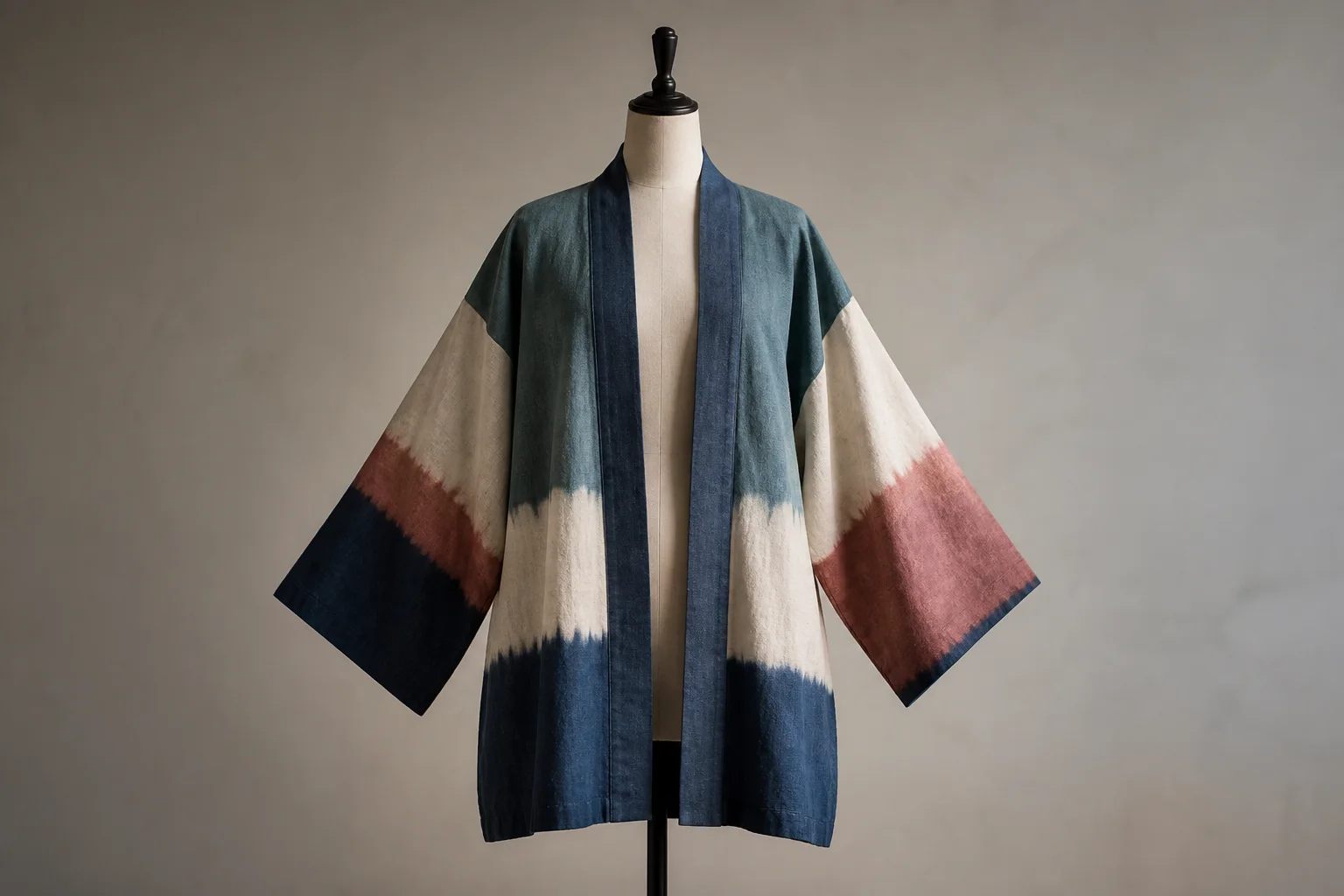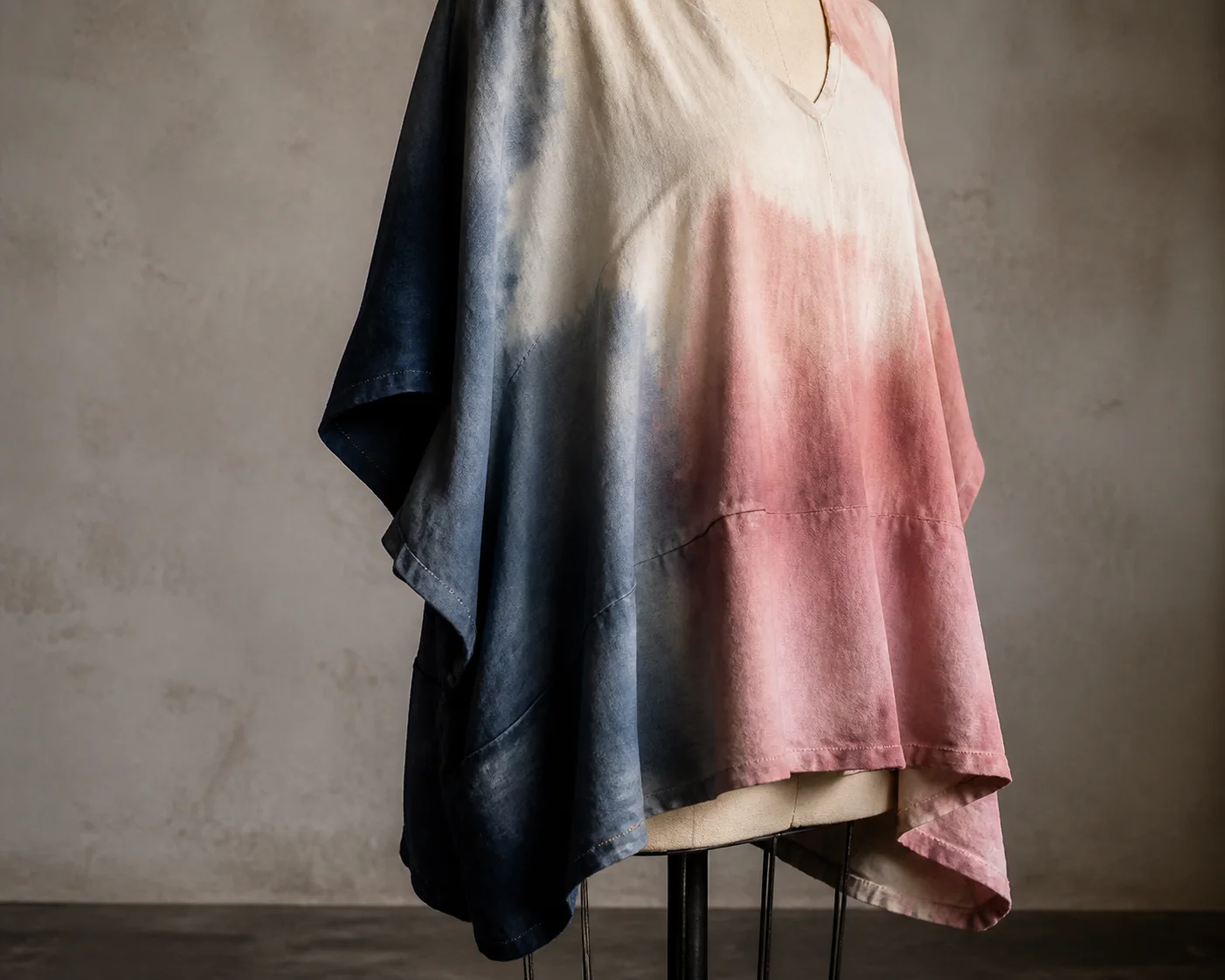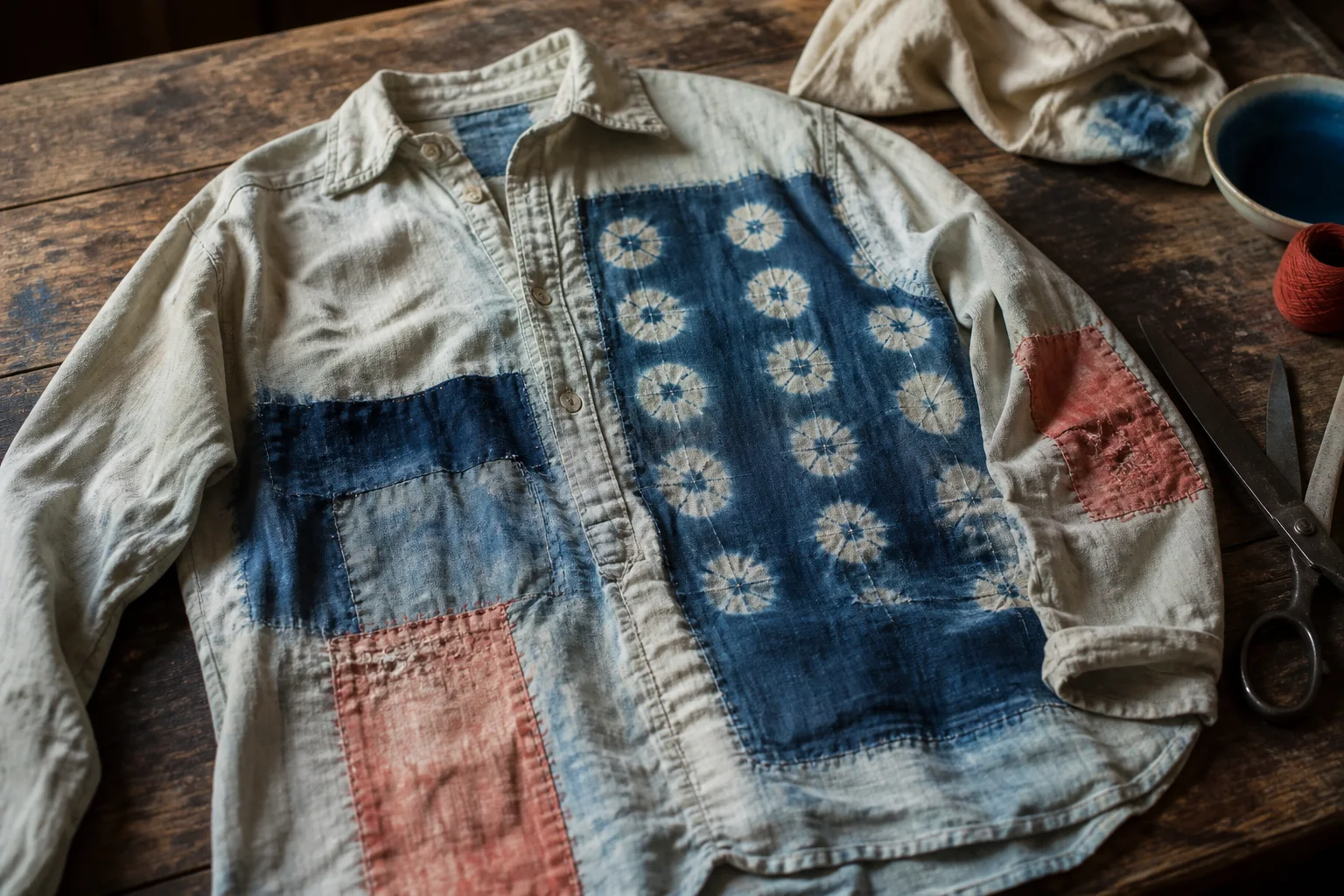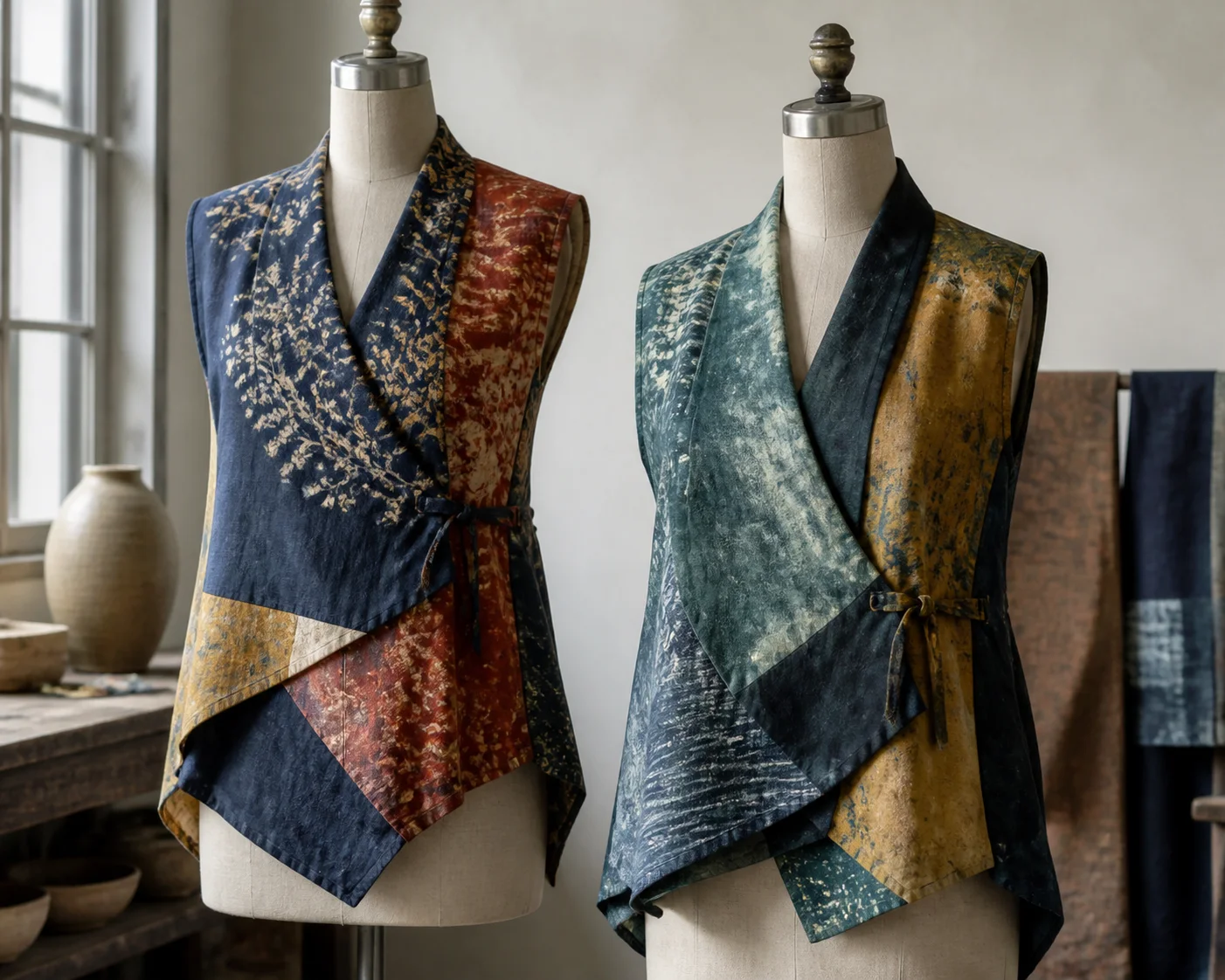
A vest exposes its front, side and back panels without asking the reader to solve a sleeve first. That makes it a useful format for studying how cloth becomes a body-facing composition.
Panel logic matters
A vest can hold a large resist field on the back and a smaller repeat on the front. The join, facing and opening show whether the maker planned for a body or only for a flat rectangle.
- Read the front and back together
- Check the armhole edge
- Notice where the repeat stops
Keep the garment specific
A vest is a format, not a cultural claim. Describe the construction that is visible and link the process vocabulary to a source rather than borrowing a name as decoration.
- Use plain garment language
- Keep culture in its context
- Do not infer provenance from colour